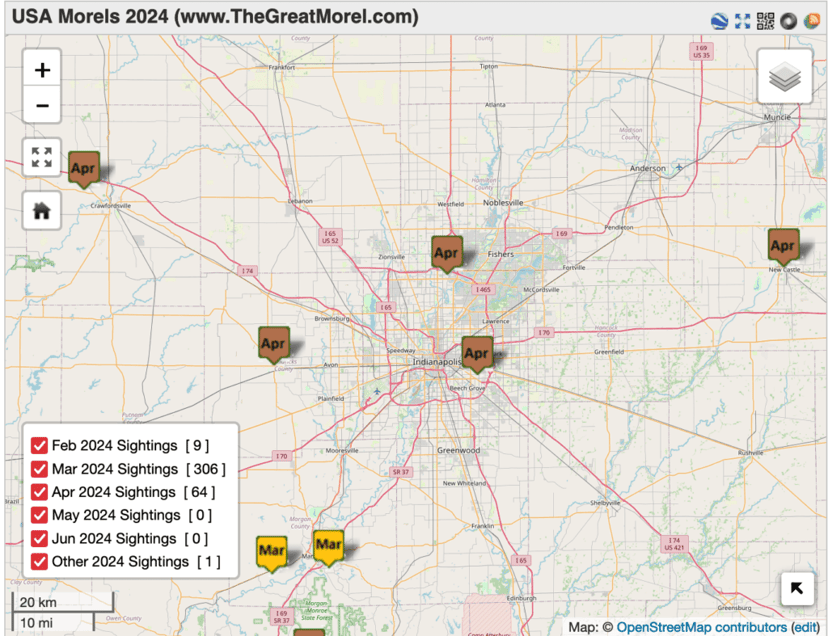
For the best chances of success, focus on areas near dead elm trees, south-facing hills, and spots where water can linger for a day. Always respect private property and observe any posted signs. Keep in mind that foraging is generally permitted in Indiana state forests but restricted in most state parks, so check the specific rules before you head out.
Identifying morels
Morel mushrooms are distinguished by their unique cone shape and honeycomb texture. Indiana has several varieties: black, half-free, white, and tulip morels. Early in the season, black morels are particularly sought after. Their exquisite taste makes them a favorite among foragers, suitable for cooking in various styles, such as pan-fried in butter or with Cajun seasoning.
The single most important rule: a true morel is hollow inside, stem and cap. If it's not hollow, don't eat it. False morels can look similar but are toxic, so when in doubt, leave it out.
Maximizing Your Hunt
Leverage tools like the Morel Sightings app to stay updated on where morels are being found across the state. Joining local foraging or mycology clubs can also enhance your hunting experience by connecting you with experienced foragers and educational resources. For more in-depth information, consider reaching out to the Purdue Extension office in your area.
The importance of correct identification cannot be overstated, as consuming the wrong mushroom can be hazardous. Engage with knowledgeable foragers, attend workshops, and consult reliable field guides to ensure your foraging is safe and rewarding.
Remember, the key to a successful morel hunt is not just about finding mushrooms but also about respecting nature and the environment. Pack out what you pack in, take only what you need, and leave young or undersized morels to mature.
Happy hunting
May your baskets be full of morels this season. For more Indiana outdoor stories, browse our In the Parks coverage or sign up for the Get Indiana newsletter for weekly Hoosier stories.
Frequently asked
Quick answers.
The useful details, answered clearly and without the digging.
When is morel mushroom season in Indiana?
Morel season in Indiana typically runs from early April through mid-May. The season starts when soil temperatures consistently reach around 50 degrees Fahrenheit, often beginning in southern Indiana first and moving north over a few weeks.
Where are the best places to hunt morels in Indiana?
Public lands that allow foraging include Indiana state forests like Morgan-Monroe and Yellowwood. Near Fishers and Indianapolis, popular spots include Fort Benjamin Harrison State Park, Brown County, and Flat Fork Creek Park. Look near dead elm trees, south-facing hillsides, and damp creek bottoms.
Is mushroom hunting legal in Indiana state parks?
Foraging rules vary by property. Indiana state forests generally allow personal-use mushroom foraging, while most state parks do not. Always check the specific property's rules with the Indiana Department of Natural Resources before harvesting.
How do you identify a true morel?
A true morel has a hollow stem and cap (both should be empty inside if cut lengthwise) and a honeycomb-textured exterior. False morels appear similar but have wrinkled or brain-like surfaces and a cottony or chambered interior. False morels are toxic.
What other seasonal foraging is available in Indiana in spring?
In addition to morels, Indiana spring foragers also collect ramps, fiddleheads, and tap maple trees during the late-winter and early-spring maple syrup season.